
By Linda Fisher Thornton This series has explored 5 important leadership spheres of Ethical Thinking and Decision Making. This week I’m summing it up in a checklist that will help you apply all 5 to your daily choices. When you are making a key decision, run it through the checklist to be sure you have considered all 5 important dimensions.
Blog
Ethical Thinking and Decision Making for Leaders (Part 5)

By Linda Fisher Thornton While change is a constant reality, it doesn’t always factor into leadership thinking. In Part 1 and Part 2 of this series, I explored the Depth of our thinking, and the importance of understanding Context. In Part 3 and Part 4, I looked at embracing Complexity and the importance of full Inclusion. In Part 5, I’ll describe how embracing Change helps us make ethical decisions.
Ethical Thinking and Decision Making for Leaders (Part 4)

By Linda Fisher Thornton Who we include in our ethical thinking, and how broadly we consider our responsibility to others are both important elements of ethical leadership. In Part 1 of this series, I explored the Depth of our thinking, and in Part 2, I broke down issues related to understanding Context. In Part 3, I looked at embracing Complexity. In Part 4, we’ll dig into the importance of Inclusion.
Ethical Thinking and Decision Making for Leaders (Part 3)

By Linda Fisher Thornton Ethical Thinking and Decision Making require staying grounded in ethical values, but there is much more to do than knowing our values and living them every day through our choices. In Part 1 of this series, I explored the Depth of our thinking, and in Part 2, I broke down issues related to understanding Context. In Part 3, let’s take a look at Complexity.
Ethical Thinking and Decision Making for Leaders (Part 2)
By Linda Fisher Thornton In Part 1 of this series I looked at the importance of Deep Thinking. In Part 2, we’ll consider the Context. No matter how much effort it takes to understand the context, we can’t expect to make an ethical decision without taking that step.
Ethical Thinking and Decision Making for Leaders (Part 1)

By Linda Fisher Thornton Welcome to Part 1 in the series “Ethical Thinking and Decision Making for Leaders.” Welcome to Part 1 in the series “Ethical Thinking and Decision Making for Leaders.” Ethical decision-making is not simply a task. It is the process of analyzing and understanding multiple connected variables in a changing context AND applying ethical values to make responsible choices. It requires doing the work to understand issues clearly before making decisions or taking action. In each post in this series, I’ll explore one aspect of this complex, connected process. Today I’ll focus on the importance of deep thinking.
10 Leadership Lessons From Pokemon Go

By Linda Fisher Thornton
I resisted playing the wildly popular game Pokemon Go as long as I could, but the world was playing it (including my teenagers) so awhile back I decided to give it a go. As I learned the basics of the game I noticed that its structure is aligned with some of the principles of good leadership. Whether that similarity is accidental or intentional, I can't say, but I am sharing my observations in this post.
Ethics and Leadership Should Be Learned Together

By Linda Fisher Thornton Preparing leaders for ethical leadership is a long-term process. It requires careful thought about the messages we are sending. For example, what message are we sending when we separate ethics training from other leadership training?
Why Making Money Doesn’t Ensure Business Success

By Linda Fisher Thornton Ask for profitability and your company may get it, at the expense of customer satisfaction, employee engagement, and product safety. Making profitability a top business goal without balancing that with adequate ethics awareness is extremely risky, and could lead to community backlash that ends up destroying your brand.
Ethical Perspectives: Rights, Responsibilities, and Freedom
By Linda Fisher Thornton While some people think of rights, responsibilities and freedom separately, in a compartmentalized way, I believe they cannot be separated, and according to John Courtney Murray, freedom was always intended to be grounded in ethical values.
Making Ethics Clear
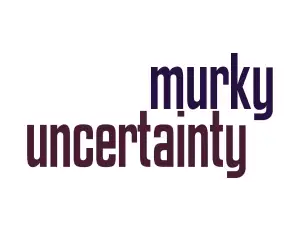
By Linda Fisher Thornton Workplace issues are complex and opinions vary about the right thing to do in challenging situations. This complexity and uncertainty combine to create a "murky uncertainty" that may keep people from giving us their best, most ethical performance. Leaders may intend to create an ethical culture, but may still have difficulty getting past the murky uncertainty about what ethics means. To move beyond the uncertainty, we need to take the time to talk about ethical behavior and how we will make ethical decisions.
Responding (Ethically) To An Overwhelmed Employee

By Linda Fisher Thornton "The issue of the overwhelmed employee looms large" according to Josh Bersin, Bersin by Deloitte. (Are You an Overwhelmed Employee? New Research Says Yes, LinkedIn). Employees are having a hard time managing an overload of information and tasks, and the problem is not getting any better.
Systems Thinking: The Diet Soda Puzzle

By Linda Fisher Thornton Research is showing that diet sodas do not help prevent weight loss, and in fact may be a cause of weight gain. How can this be? Since the way we understand it depends on which kind of thinking we use, let's examine the issue using several different kinds of thinking.
Ethical Leaders Care (Part 4)

By Linda Fisher Thornton I wonder what our workplaces would be like if every leader cared. Most leaders care about their own well-being. But what if every leader cared about others? How would things be different? In an organization where every leader cared, wouldn’t we experience improved employee engagement and customer retention? Wouldn’t it be easier to recruit and retain talented and dedicated employees? Wouldn’t we be able to get more done?
Ethical Leaders Care (Part 3)

By Linda Fisher Thornton Demonstrating care is one of the hallmark requirements of good leadership. In addition to caring about what happens in our own careers, we must CARE about people, about their success, and about creating a positive work environment. If leaders don’t seem to care, that numbs the organization’s culture, disabling the natural systems that would prevent and identify ethical risks.
 Leading in Context