
By Linda Fisher Thornton Ego has a way of undoing even our best intentions as leaders. We have to be aware of our ego and manage it to avoid getting off track. In a world that requires rapid adaptation to changing events and circumstances, ego tries to maintain the status quo and works against our ability to pivot in response to change. Think of the adaptable leader as piloting a boat, able to turn at a moment’s notice as the situation warrants it. The ego-driven leader, in contrast, is living in a fortress with a moat around it, protecting status and the status quo at all cost. The fortress can’t move, can’t pivot, can’t adapt to changing circumstances.
Category: Ethical Decision Making
Leadership, Complexity and Control
By Linda Fisher Thornton Leaders who solve complex problems need a special blend of qualities – the curiosity to untangle the variables, the persistence to keep trying, and the openness to change beliefs and strategies as answers emerge from the chaos. But those qualities will only take them so far. They’ll also need to be great listeners and engaging leaders, so that they gather information from stakeholders and team members. They’ll need to be systems thinkers with a global mindset.
What is (and Isn’t) Leadership?
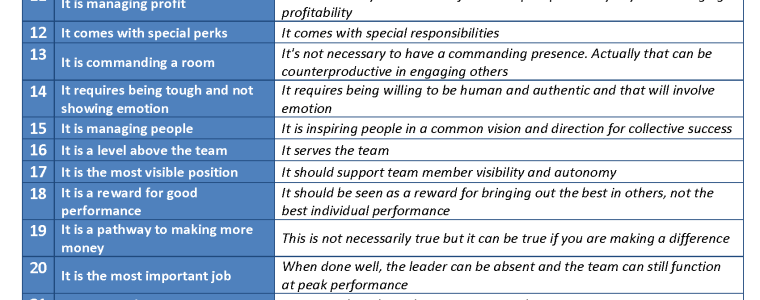
By Linda Fisher Thornton It occurred to me while pruning shrubs that we have many mistaken
What Role Does Exclusion Play in Hate and Violence? Part 2

By Linda Fisher Thornton Moral exclusion includes using an insider mindset and thinking that others (who are not members of the group) as not worthy of protecting. If you're not yet familiar with moral exclusion, this post may be helpful background on differences in world views and selective inclusion.
What Role Does Exclusion Play in Hate and Violence? Part 1

By Linda Fisher Thornton Hate speech and violence do not adhere to ethical values. An ethical person will quickly rule them out due to the harm they cause to others. But even when someone wants to be an ethical person, there are problems with human thinking that can enable hate and violence to happen.
10 Quotes to Inspire Leaders in 2024 (Part 1)

By Linda Fisher Thornton This series includes 10 quotes (linked to blog posts with leadership guidance) to inspire you and help you improve your leader development as we head into the new year. Part 1 includes the first 5.
Top Post Series of 2023: Leading in Context Blog
By Linda Fisher Thornton The Top Post Series for last year on the Leading in Context Blog reflected how to navigate the nuances of ethical culture building. It featured specific areas of focus and strategies for building an ethical culture in your organization.
Top 10 Posts of 2023: Leading in Context Blog

By Linda Fisher Thornton Of the 52 weekly posts published on the Leading in Context Blog in 2023, these 10 were the most popular. See if you notice a theme that connects these new topics that readers accessed most frequently:
How to Tell What’s “Right” in a Complex Situation

By Linda Fisher Thornton To understand a complex situation, you first have to WANT to see it as it really is. This means letting go of preconceived ideas of what might be true, and being open to what may unfold as you learn more. After approaching the situation with this open mindset, you need to get more information. As you know from completing puzzles with lots of pieces, a few pieces do not show you the whole picture. As you complete a jigsaw puzzle, you start to see parts of the picture and begin to get a sense of it, but you're definitely still not seeing it as it really is.
Ethical Thinking and Decision Making for Leaders (Part 6)

By Linda Fisher Thornton This series has explored 5 important leadership spheres of Ethical Thinking and Decision Making. This week I’m summing it up in a checklist that will help you apply all 5 to your daily choices. When you are making a key decision, run it through the checklist to be sure you have considered all 5 important dimensions.
Ethical Thinking and Decision Making for Leaders (Part 5)

By Linda Fisher Thornton While change is a constant reality, it doesn’t always factor into leadership thinking. In Part 1 and Part 2 of this series, I explored the Depth of our thinking, and the importance of understanding Context. In Part 3 and Part 4, I looked at embracing Complexity and the importance of full Inclusion. In Part 5, I’ll describe how embracing Change helps us make ethical decisions.
Ethical Thinking and Decision Making for Leaders (Part 4)

By Linda Fisher Thornton Who we include in our ethical thinking, and how broadly we consider our responsibility to others are both important elements of ethical leadership. In Part 1 of this series, I explored the Depth of our thinking, and in Part 2, I broke down issues related to understanding Context. In Part 3, I looked at embracing Complexity. In Part 4, we’ll dig into the importance of Inclusion.
Ethical Thinking and Decision Making for Leaders (Part 3)

By Linda Fisher Thornton Ethical Thinking and Decision Making require staying grounded in ethical values, but there is much more to do than knowing our values and living them every day through our choices. In Part 1 of this series, I explored the Depth of our thinking, and in Part 2, I broke down issues related to understanding Context. In Part 3, let’s take a look at Complexity.
Ethical Thinking and Decision Making for Leaders (Part 2)
By Linda Fisher Thornton In Part 1 of this series I looked at the importance of Deep Thinking. In Part 2, we’ll consider the Context. No matter how much effort it takes to understand the context, we can’t expect to make an ethical decision without taking that step.
Ethical Thinking and Decision Making for Leaders (Part 1)

By Linda Fisher Thornton Welcome to Part 1 in the series “Ethical Thinking and Decision Making for Leaders.” Welcome to Part 1 in the series “Ethical Thinking and Decision Making for Leaders.” Ethical decision-making is not simply a task. It is the process of analyzing and understanding multiple connected variables in a changing context AND applying ethical values to make responsible choices. It requires doing the work to understand issues clearly before making decisions or taking action. In each post in this series, I’ll explore one aspect of this complex, connected process. Today I’ll focus on the importance of deep thinking.

