
By Linda Fisher Thornton In Part 1 of this series on Recognizing Ethical Issues, I addressed the gaps in our thinking that require us to develop an ethical alert system. in Part 2, I explored why some leaders who want to do the right thing still don't "do the work" to learn how to do it. In Part 3, I'll dig into the importance of ethical awareness as the basis for ethical decision making.
Tag: ethical thinking
Recognizing Ethical Issues (Part 2)

By Linda Fisher Thornton In Part 1 of this series, I explored why it is important to develop our own internal warning system to alert us when we need to think carefully about ethical issues. In this post, I'll address why some leaders who want to do the right thing have not yet developed their capacity to detect ethical issues.
Recognizing Ethical Issues (Part 1)

By Linda Fisher Thornton When a plane experiences heavy turbulence, a light on the overhead panel alerts passengers to take a seat and fasten their safety belts. The instructions are clear, people know what to do, and it’s usually an orderly process. When people make decisions in their daily rounds, though, there is no external alert or audible alarm to signal that they are stepping into an ethical issue or an ethical gray area and need to carefully consider ethical issues. This can be a problem, especially because there are so many cognitive biases working against us as we try to make responsible decisions.
Does “Politically Correct” Mean Inclusive and Respectful?

By Linda Fisher Thornton
I studied Linguistics and Communications at The University of Virginia and I am fascinated by how words shape our perception of things. Lately there has been a lot of discussion about the term "politically correct," sometimes shortened to "PC." I have noticed it is used when people refer to the pressure to be polite to all people, including those who are different from themselves.
What is an Ethical “Win?”

By Linda Fisher Thornton What it means to "win responsibly" in business has changed.
Ethical Leaders Seek Truth and Speak Truth

By Linda Fisher Thornton Ethical leaders seek the truth and speak the truth.
We The People: What We Value
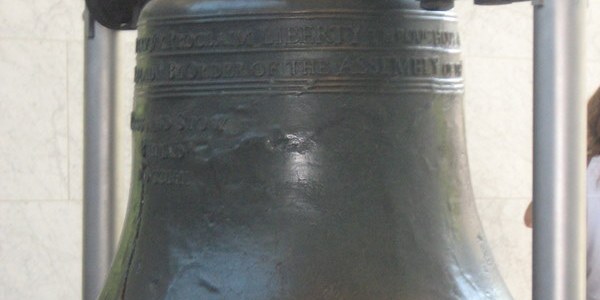
By Linda Fisher Thornton As we near the 4th of July, it is a fitting time to remind ourselves of the greater vision for our country. During a tour of the Constitution Center in Philadelphia, I realized that the U.S. Constitution opens with a beautiful ethics code designed to ground our nation in a commitment to the long-term greater good of society.
Seeing The Facets of Facts Part 2

By Linda Fisher Thornton Building on last week's post about Seeing the Facets of Facts, this week I'm digging into the dangers of "Partialized Facts." When I say "Partialized Facts" I refer to treating one perspective on an issue that is only part of the picture as the whole truth. I have seen it happen so many times. It's time to call it what it is. Unethical.
Seeing the Facets of Facts Part 1

By Linda Fisher Thornton Most of the time when we answer a question with a single response, that answer is only part of the picture. We have all seen leaders (who may feel a need to appear decisive) answer quickly without thinking through the implications of their response. When this happens, what they share is oversimplified and "partialized," not a relevant or responsible interpretation of the complex issues involved.
5 Unexpected Teaching Insights

By Linda Fisher Thornton After teaching for more than 20 years, I was surprised last week by the University of Richmond School of Professional and Continuing Studies with the Itkowitz Family Distinguished Faculty Award. This is especially meaningful recognition for me, since I had 'learned through' the process of completely redesigning my Applied Ethics course as an online course and changing my teaching approach during the pandemic. This course redesign was an arduous process, and one that stretched me to become a better professor and a better person.
Strategies For The Overscheduled Leader

By Linda Fisher Thornton More commitments than time. Six or more meetings a day. Eating at your desk. Does any of this sound familiar?
The Give and Take of Trust

By Linda Fisher Thornton The post Should Trust Be Freely Offered or Conditionally Earned generated lively discussions in LinkedIn Groups about extending trust when we meet someone new. It was clear from reading the discussions that trust has many different dimensions. Readers shared how they perceived trust – some saw it as an emotion, some saw it as a relationship, others described it as a mindset. They took the discussion beyond the original question and explored how we extend trust to others based on many variables.
Should People Have to “Earn” Your Trust?

By Linda Fisher Thornton When we meet someone new, should we trust them right away? Should we assume that they are trustworthy and give them the benefit of the doubt, or should we hold back until we are sure that they are worthy of our trust?
Ethical Leadership Fuels Adaptability
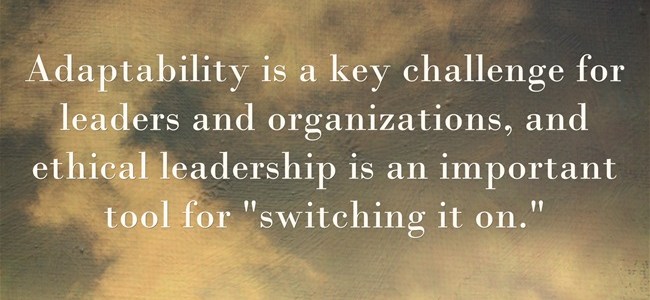
By Linda Fisher Thornton The post “Leader Competence: Will It Be A Multiplier or Divider?” generated some great discussion on social media. Here’s a quote from the post: “Leader competence is either going to be a multiplier or a divider. When you have it, you multiply performance and trust, with exponential results. Without it, you divide your possible results by the incompetence factor.” After reading the post, one reader requested that I write more on the topic. This week I’m digging deeper into the multiplying and dividing effects of leader (in)competence, looking at how a leader’s ethical competence impacts trust, people, bottom line results and organizational adaptability:
Is Good Leadership Realistic and Optimistic?

By Linda Fisher Thornton Some leaders take the view that it's important to plan for the worst case scenario. Others prefer to keep it positive and focus on the best possible outcomes. Which is better leadership?

