By Linda Fisher Thornton Workplace issues are complex and opinions vary about the right thing to do in challenging situations. This complexity and uncertainty combine to create a "murky uncertainty" that may keep people from giving us their best, most ethical performance.
Category: Ethical Organization
5 Reports Say Business Ethics is Improving
By Linda Fisher Thornton What do Deloitte, Strategy & PwC, Dow Jones, The Ethics Resource Center and LRN have to say about trends in business ethics? Get ready for some good news:
Ethics and Trust are Reciprocal
By Linda Fisher Thornton I was asked recently to explain in simple terms how ethics and trust are related. It is a great question, because we define trust and ethics in so many different ways. Here are some observations about how trust and ethics are related, and what their relationship means for us as organizational leaders.
Building Trust: What to Weed Out
By Linda Fisher Thornton I was weeding in the garden this week, and I discovered two new weeds that were taller than I was. I started thinking about how quickly things can get away from us, in the garden and in our organizations. There are things we must do to build a high trust workplace. But there are equally important things that we must prevent or weed out for trust to flourish.
Ethics Isn’t Finite: It’s Evolving
By Linda Fisher Thornton As we strive to build ethical organizations, we must remember that our target is moving. As the world changes, ethical expectations change. It would be easier to develop ethical leaders and build ethical organizations if ethics were a fixed destination. A point on the map. A line in the sand. But it's just not that simple. Ethical expectations are evolving.
The Trouble With Oversimplified Conversations
By Linda Fisher Thornton Sometimes in the rush to make a quick leadership decision, we end up "dumbing down" an issue to speed up the process. "Dumbing down" an issue may make the decision easier to make, but it may also lead us to make choices without considering current information, trends or context. Decisions made that way can cause problems.
5 Leadership Development Priorities

By Linda Fisher Thornton The recent post "It's Not About Us" was the most popular post of all time on the Leading in Context Blog. It described how our understanding of leadership has moved beyond a focus on the leader to a focus on creating shared value for others.
Ethics is Contagious
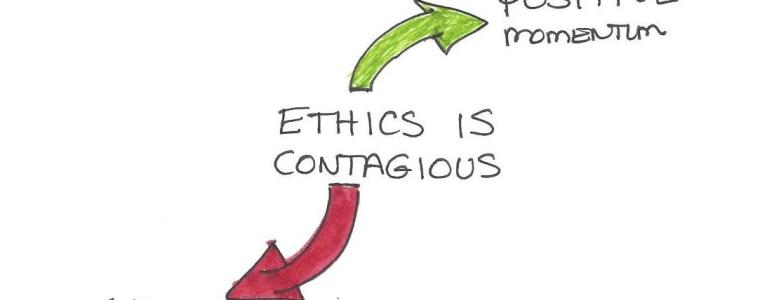
By Linda Fisher Thornton I must admit that I can't take the credit for coming up with the catchy title of this post. A group of attendees at a recent keynote I delivered came up with it as a way to describe what they had learned. And it makes perfect sense. Ethics is catching, and leaders set the tone for the ethics of the organization. What would happen if everyone in the organization followed our lead? Would the organization be more or less ethical? What kind of ethics are people catching as they work in our organization?
Well-Being is Trending

By Linda Fisher Thornton Have you noticed that well-being is trending? It's not enough to provide fair pay and good work conditions any more. People want to participate in something meaningful and work in high-trust cultures where they can flourish. They seek out companies that care about their well-being.
Got Ethics? Are You Positive?
In spite of all the bad news you see in the media about ethics, we don't build ethical cultures by focusing on the negative. Let's face it - thinking about fraud, embezzlement and conflict of interest won't make us better leaders. But that's what many of us are focusing on in our organizations.
In Conversation About Ethics
By Linda Fisher Thornton This week Realizing Leadership: Everyday Leaders Changing Our World published a cover story interview with Laurie Wilhelm. We talked about what ethical leadership really means, how ethics and trust are related, and how leaders can learn to be more ethical from wherever they are.
Making Decisions Like Global Citizens
By Linda Fisher Thornton Character is important, but leading ethically in the fullest sense requires much more than just demonstrate good character. In this 2 minute video, I describe 7 different perspectives that you may be hearing around the table as you discuss ethical dilemmas in your organization. Instead of being competing perspectives, each one is an important element of the full picture of what it means to lead ethically in a global society.
How Do We Achieve Corporate Integrity?
By Linda Fisher Thornton In the quest for corporate integrity, we must do a number of things well. We need to have clear expectations for what ethical leadership looks like in our organization; we need a congruent system for managing ethics that sends a consistent message; and we need a clear message about what taking responsibility for ethics really means to us. There is an ethics trend away from a "push" mentality when it comes to learning about ethics (making people do it) to a "pull" mentality (making it positive so that people will want to do it). Taking on that "pull mentality" involves creating a positive ethical environment:
How Current is My Message About Ethics?
By Linda Fisher Thornton Ethical expectations are continually increasing, and it is not always easy for leaders to keep up with the changes. This week, I'm sharing an assessment to help you answer the question "How current is my message about ethics?"
Success From the Field Interview – Balancing Ethics and Profits
By Linda Fisher Thornton This week Will Eisenbrandt posted our interview about ethical leadership at NetworkedWealth.com. This Success From the Field Podcast with Linda Fisher Thornton is a great overview of the 7 Lenses™ of Ethical Responsibility. In the interview he asks me some questions about how to balance ethical values in day-to-day decisions - for example, balancing profits with concern for the planet.
 Leading in Context